

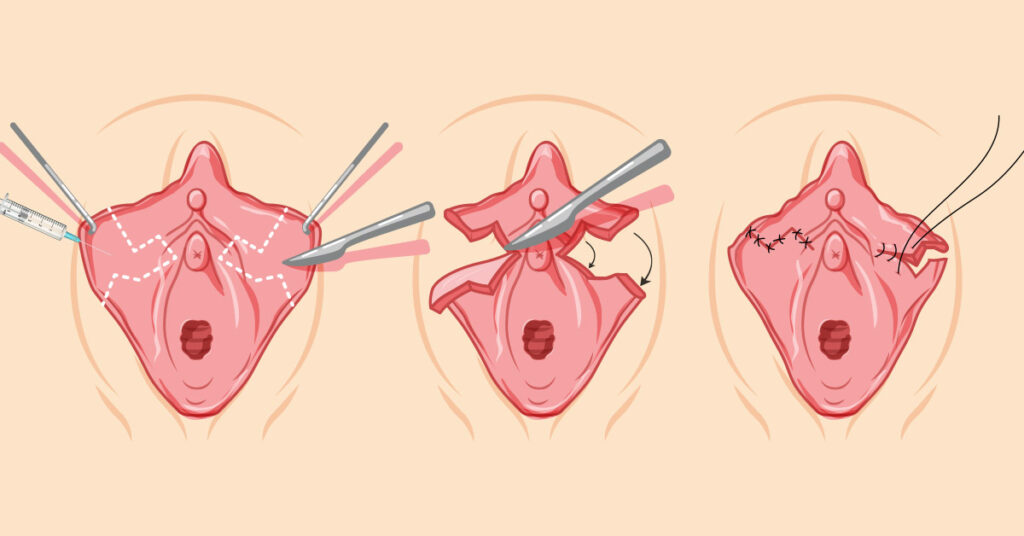
Labiaplasty is a cosmetic and corrective surgery in the genital area of women, which aims to change the size and shape of the labia (vaginal edges).
In this procedure, the labia minora (inner) or the labia majora (outer) become smaller or more symmetrical.
Labiaplasty can help improve the appearance of the genital area and reduce discomfort caused by wear and irritation of the labia during exercise, wearing tight clothing, and everyday activities.
Why is labiaplasty performed?
Reasons for labiaplasty may include the following:
1. Beauty and symmetry: Some women feel uncomfortable or lose self-confidence due to the asymmetry or excessive size of the labia,
and with this procedure, they improve the appearance of the labia.
2. Eliminate physical discomfort: large labia can cause discomfort during activities such as cycling, sports and even sitting. Also, this issue may lead to irritation and pain during intercourse.
3. Increased hygiene and comfort: In some cases, larger labia due to many wrinkles are prone to moisture and bacteria accumulation,
which can increase the risk of infection and unpleasant odor.
Procedures of labiaplasty
The labiaplasty operation is usually performed with local anesthesia or, if the patient wishes, with general anesthesia, and its general steps include the following:
1. Cutting and correcting the labia: the surgeon cuts the extra or uneven part of the labia using different techniques.
One of the common methods is the “edge cut” technique, in which the length and size of the labia are shortened.
Another method is “central cut” which helps the natural and curved shape of the labia.
2. Stitching and mending: After trimming, the edges are carefully stitched. Sutures are usually absorbable and do not require pulling.
Care after labiaplasty
To recover faster and reduce complications, you should take care of the following:
Avoiding heavy activities and sex for 4 to 6 weeks
• Using a cold compress in the desired area to reduce swelling
• Maintaining hygiene and preventing infection
• Wearing loose and comfortable clothes to avoid irritation and pressure on the surgical area
• Taking medications prescribed by a doctor such as antibiotics and pain relievers
Possible complications of labiaplasty
Although labiaplasty is a safe procedure, it may have complications such as infection, swelling, pain, bleeding, or scarring.
These complications are usually minimized by carefully following the doctor’s recommendations and choosing a skilled surgeon.
Results and longevity of labiaplasty
The results of this operation create a permanent improvement in the shape and size of the labia, and most women enjoy increased comfort and self-confidence after recovery.
Labiaplasty can have a positive effect on a person’s quality of life, sense of health and comfort.

Here are some additional details and important information about labiaplasty:
Types of labiaplasty techniques
There are different methods for labiaplasty, which are chosen based on the patient’s condition and surgical goals. Here are the most important methods:
1. Trim technique: This method is the simplest and most widely used labiaplasty technique.
In this method, the excess tissue of the edges of the minor labia is cut and reduced to the desired size. This method is especially suitable for women who just want to reduce the size of their labia.
2. Wedge technique: In this method, a triangular section is removed from the middle of the labia minora and then the edges are sewn together.
This technique gives a more natural and curved appearance to the labia and is suitable for women who want to maintain the natural edge of the labia.
3. Z-Plasty technique: In this method, a Z-shaped incision is made in the labia, which preserves the elasticity and flexibility of the labia.
This method is suitable for women who suffer from lack of flexibility or uneven texture.
4. Labia majora reduction technique: This technique is performed for women who have discomfort or loss of self-confidence due to large or loose labia majora.
In this method, the extra tissue of the larger labia is removed and reshaped.
Benefits of labiaplasty
• Improved comfort and reduced irritation: One of the biggest benefits of labiaplasty is reducing physical discomfort such as wear and tear on the labia during exercise,
wearing tight clothing, or performing daily activities.
• Increased self-confidence: Many women report an increase in their satisfaction and self-confidence in sexual relations and daily life after performing this procedure.
• Improvement of sexual performance: As the labia become smaller and more symmetrical, some women experience an improvement in sexual sensation and pleasure.
Of course, this is different depending on the individual’s circumstances.
• Maintaining better hygiene: By reducing the size of the labia, the risk of accumulation of moisture and bacteria in the genital area is reduced,
which can help prevent unpleasant odors and genital infections.
Preparation before labiaplasty
To get the best result and reduce possible complications, pre-operative preparations are very important. Some important points in this regard are:
• Consultation with a specialist doctor: talk to the doctor about your expectations and the tips and details of the procedure. The doctor informs you about the procedure, pre- and post-care.
• Stop taking anticoagulants: Medicines such as aspirin and warfarin may increase bleeding. Usually, the doctor recommends to stop taking these drugs a few days before the operation.
• Observance of personal hygiene: To avoid any infection, hygiene of the genital area should be observed and use clean underwear.
Care after labiaplasty
Adhering to post-operative care will help reduce pain and swelling and speed recovery. These cares include the following:
• Using a cold compress: To reduce swelling and pain in the early days, you can use a cold compress on the surgical area.
• Avoiding intense activities: Avoid heavy sports and physical activities for at least four to six weeks.
• Wearing loose clothes: Use comfortable and loose clothes so that the surgical area is not under pressure.
• Use of prescribed medications: Take pain relievers and antibiotics as prescribed by your doctor to prevent infection and inflammation.
• Avoiding sex: Avoid sex for 4 to 6 weeks until the area is fully healed and the stitches are repaired properly.
Possible complications and risks of labiaplasty
Although labiaplasty is generally safe, like any surgery, there may be complications. Some possible complications include:
• Infection: There is a possibility of infection in the surgical area, but this risk is minimized by maintaining good hygiene and taking prescribed antibiotics.
• Bleeding and bruising: In the first days after the operation, slight bruising and bleeding may occur, which is normal.
• Temporary loss of sensation: In some cases, there may be a temporary loss of sensation in the operated area, which usually returns to normal within a few weeks.
• Dissatisfaction with the final result: In some cases, the patient may not be satisfied with the result of surgery for various reasons.
This problem can be managed by choosing a skilled surgeon and careful pre-operative counseling.
Duration of recovery and durability of results
The recovery time after labiaplasty is usually about 2 to 4 weeks, but it takes 6 weeks to fully recover and return to normal activities.
The results of labiaplasty are usually long-lasting and permanent, but factors such as natural childbirth or aging can have an impact on long-term results.
Overall, labiaplasty can be a suitable option for women who are looking to improve the appearance and comfort of their genital area for aesthetic, physical or functional reasons.
Choosing a skilled surgeon and its importance in labiaplasty
Choosing a skilled and experienced surgeon to perform labiaplasty is very important. This surgery, because it is performed in a sensitive area, requires special precision and expertise.
A skilled surgeon can achieve more beautiful and natural results in addition to reducing risks and complications with precision and delicacy in performing the operation.
Also, the surgeon must answer all the questions and concerns of the patient before the operation and inform him of all aspects.

Important questions to ask the surgeon before surgery
Before choosing a surgeon, it is better to ask him important questions to be sure of your decision:
1. How many labiaplasty procedures have you done so far?
2. What were the previous results of your patients? Can I see your portfolio?
3. How long does the operation take and where is it performed?
4. What is the recovery period like and what care is needed?
5. Does this surgery have any special complications that I should know about?
Accurate answers to these questions can help you make a decision and give you more confidence in choosing the right surgeon.
The difference between labiaplasty and other vaginal rejuvenation methods
Although labiaplasty is a surgical procedure that addresses the appearance of the labia,
it differs from other procedures such as vaginal laser and radiofrequency (RF) that are used to improve the function and rejuvenate the inner tissue of the vagina.
These procedures are usually non-surgical and aim to improve flexibility, collagen production and reduce vaginal dryness,
while labiaplasty focuses on improving the external appearance of the genital area.
The cost of labiaplasty
The cost of labiaplasty surgery varies depending on various factors such as the surgeon’s expertise, the type of clinic, the technique used, and the geographic location.
Generally, this surgery falls under the category of cosmetic surgery and is usually not covered by insurance because it is considered a medically unnecessary surgery.
Final recommendations before deciding to undergo labiaplasty
Before deciding to undergo labiaplasty, consider the following:
• Be sure of the real need: be fully aware of your needs and goals and ask your surgeon for guidance.
• Complications and restrictions check: Get enough information about all possible complications and restrictions of this procedure.
• Do enough research: Gather enough information about the different labiaplasty techniques and the experience and skill of the surgeons available.
• Have realistic expectations: The results of surgery may not always be exactly what you imagined, so it’s important to go into the process with realistic expectations.
Ultimately, labiaplasty can be a positive and satisfying experience and an effective solution for women who suffer from physical and visual discomfort caused by large labia.
Paying attention to pre- and post-operative tips and care and choosing an experienced surgeon are key factors in achieving successful and safe results.
Importance of recovery period and key recommendations for faster recovery after labiaplasty
After the labiaplasty operation, observing the recovery period and following the surgeon’s recommendations will help you recover faster and with less pain.
Usually, the initial recovery period lasts about 2 to 4 weeks, but it may take up to 6 weeks to fully return to daily activities and normal life.
Key recommendations for recovery:
1. Hygiene of the genital area: hygiene of this area is very important, because the stitches and wounds created are exposed to infection.
Using mild detergents and lukewarm water and gently drying the area helps prevent infection.
2. Avoiding long-term sitting: In the early days, it is better to avoid long-term sitting and use soft cushions when sitting so as not to put too much pressure on the operated area.
3. Using a cold compress: A cold compress can help reduce swelling and pain in the first 24 to 48 hours after surgery.
Note that you should not put the compress directly on the skin; It is recommended to use a towel or soft cloth between the compress and the skin.
4. Wear loose and comfortable clothes: Wear loose and comfortable underwear and pants to avoid irritation and abrasion in the surgical area.
Tight clothing may cause pressure and discomfort.
5. Avoiding sexual intercourse and intense activities: Avoid heavy activities, sports and sexual intercourse for 4 to 6 weeks to prevent complications and the creation of new wounds.
The doctor will usually tell you the right time to resume sexual activities.
6. Taking prescribed medicines: Take the medicines prescribed by the doctor to reduce pain, swelling and prevent infection regularly.
The use of approved painkillers can help to better tolerate pain.
7. Use of prescribed ointments and creams: In some cases, the doctor may prescribe certain creams and ointments to prevent scarring or to heal faster.
Use these ointments regularly and strictly according to the doctor’s instructions.
Post-operative follow-ups and frequent visits
After labiaplasty, you may need frequent visits to check the healing process.
In these visits, the doctor examines the stitches, wounds and the general health of the operated area and provides the necessary recommendations.
If you notice any unusual symptoms such as heavy bleeding, infection, severe pain or fever, you should see your doctor immediately.
Psychological benefits and improvement of quality of life after labiaplasty
Labiaplasty operation can have significant positive psychological effects.
Many women experience an increase in self-confidence after this procedure and are satisfied with their new and improved appearance.
Reducing physical discomforts, such as pain and wear during daily activities or sports, improves the quality of life and brings more enjoyment from daily activities to these people.
Also, by improving appearance and reducing concerns about this area, many women feel more satisfied and confident in their marital relationships.
Summary and final remarks
Labiaplasty operation can be very useful as an effective solution for women who seek to change the size and shape of the labia for various reasons,
including beauty, physical discomfort, and improving self-confidence.
Adhering to pre- and post-operative care, choosing a skilled surgeon and following health tips are among the factors that contribute to the success of this surgery.
In the end, it is better to make your final decision after full consultation with the surgeon
and with full knowledge of all aspects of the operation in order to obtain a favorable and satisfactory result.