

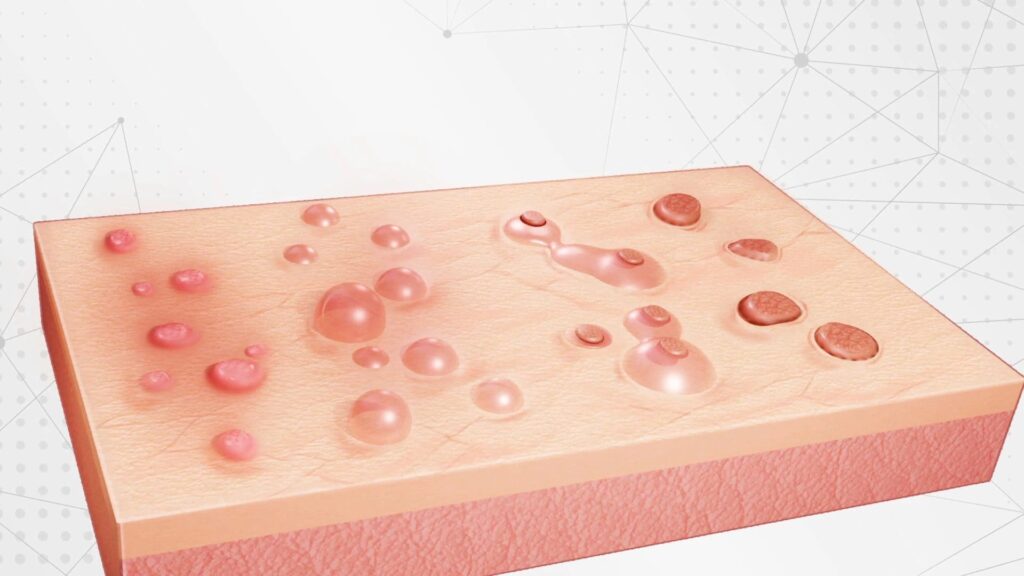
(Genital Herpes) is a viral infection caused by the Herpes Simplex Virus.
This disease usually appears in the form of sores and painful blisters in the genital area and anus and can be transmitted through sexual contact.
There are two main types of herpes simplex virus:
1. HSV-1: Usually causes oral herpes, but can also be transmitted to the genital area.
2. HSV-2: mainly causes genital herpes and is the most common cause of this type of infection.
Symptoms of genital herpes
Symptoms of genital herpes may include:
• Painful sores: small, fluid-filled sores on the genital area, anus, or thighs that usually turn into dry, brown sores after a few days.
• Itching and burning: feeling itchy and burning before the appearance of sores.
• General symptoms: fever, headache, and muscle pain may occur in some people, especially in the first outbreak.
• Swollen lymph nodes: In some cases, the lymph nodes in the genital area may become swollen.
Transfer methods
Genital herpes is usually transmitted through sexual contact (vaginal, anal and oral).
Transmission of the virus can occur even when sores are not visible; This means that a person may transmit the virus to his sexual partner without realizing it.
Diagnosis of genital herpes
Diagnosis of genital herpes is usually based on clinical examination and examination of clinical symptoms.
In some cases, your doctor may take a sample from the sore and send it to a lab to confirm the presence of the herpes simplex virus.
Treatment of genital herpes
Although there is no cure for genital herpes, various treatments are effective in managing symptoms and reducing the frequency of their occurrence:
• Antiviral medications: Medications such as acyclovir, valacyclovir, and famciclear can help reduce the severity and duration of symptoms.
• Prophylactic drugs: In people who have frequent recurrences of genital herpes, the doctor may prescribe preventive treatment with antiviral drugs.
prevention
To prevent genital herpes, you can take measures:
1. Condom use: Using a condom during sex can reduce the risk of transmission of the virus, although it does not completely prevent it.
2. Avoiding contact with wounds: Avoiding contact with active wounds and keeping the genital area healthy.
3. Awareness of sexual partner’s status: Discussing the history of sexually transmitted diseases and related tests with the sexual partner.
The importance of counseling and support
Having genital herpes may affect people’s mental health and social relationships. Feeling ashamed or worried about social judgments can lead to low self-confidence and emotional problems.
For this reason, counseling and receiving psychological support from family, friends or professionals can help sufferers cope better with these challenges.
conclusion
Genital herpes is a common and controllable disease that can be reduced with preventive measures, proper treatment and social support.
Awareness of the disease, timely counseling and creating an open space for discussion about sexual issues can help people protect their health and prevent sexually transmitted diseases.

Possible complications of genital herpes
Although genital herpes usually does not cause serious complications, it can cause complications in some cases, especially in people with weakened immune systems or pregnant women.
These complications include the following:
1. Secondary infections: Sores caused by cold sores can lead to secondary bacterial infections, especially if the sores are scratched or infected.
2. Complications during pregnancy: Pregnant women who have genital herpes should be careful because the infection can be transmitted to the baby and lead to neonatal herpes infection.
This infection can cause serious complications for the baby.
3. Risk of HIV infection: Some studies show that the presence of genital herpes may increase the risk of HIV infection, because sores can be a way for the HIV virus to enter the body.
Living with genital herpes
Living with genital herpes can be challenging, but with the right strategies and awareness, you can better manage the disease:
1. Symptom management: Learning about your symptom triggers and creating a plan to manage them can help reduce the frequency of symptoms.
Some triggers include stress, fatigue, and hormonal changes.
2. Adjusting the diet: Eating healthy and varied foods, as well as using vitamin supplements can help strengthen the immune system and reduce the occurrence of symptoms.
3. Avoidance of triggers: Identifying and avoiding triggers, such as stress and fatigue, can help reduce the prevalence of symptoms.
The importance of emotional and social relationships
Having positive and supportive emotional relationships can help people with genital herpes cope with negative emotions such as shame and loneliness.
Support from family and friends can help create a sense of belonging and confidence.
Also, participating in support groups or talking to people who have a similar experience can help reduce feelings of isolation.
Education and public awareness
Education and public awareness about genital herpes and sexually transmitted infections help to reduce taboos and increase awareness in society.
Health and educational organizations can make educational programs and information resources available to people to provide correct
and useful information about this disease and its prevention and treatment methods.
Key tips for genital herpes sufferers
1. Consultation with a doctor: If you see symptoms, it is necessary to see a doctor for proper diagnosis and treatment.
2. Regular use of antiviral drugs: If prescribed, regular use of antiviral drugs can help reduce the incidence of symptoms and infection.
3. Inform the sexual partner: It is very important to discuss the health status and risks related to genital herpes with the partner.
4. Maintaining personal hygiene: Maintaining personal hygiene and avoiding contact with wounds during periods of symptoms can help prevent the transmission of the virus.
Final conclusion
Genital herpes is one of the common and complex diseases that can be controlled and managed with proper knowledge, education, and treatment.
Affected people should take care of themselves and their mental health and use medical and social support if necessary.
Creating an open dialogue space about sexual and health issues can help reduce social stigmas and improve the quality of life of affected people.
Genital herpes prevention strategies
The following strategies can be used to reduce the risk of contracting genital herpes and protect the health of yourself and your sexual partner:
1. Condom use: Correct and continuous use of condoms during sexual intercourse can greatly reduce the risk of herpes virus transmission.
However, condoms cannot completely prevent transmission, as areas of the skin that are not covered may also become infected.
2. Awareness of sexual health status: Before starting sex with a new partner, getting tested for sexually transmitted diseases
and discussing your health status can help reduce the risk of infection.
3. Avoid sex during symptoms: If a person experiences sores or other symptoms of herpes, they should avoid sex to prevent transmission of the virus.
4. Develop good hygiene habits: Maintaining genital hygiene and washing hands after contact with sores or infected areas can help prevent secondary infections
and reduce the spread of the virus.
5. HPV vaccine shot: While the HPV vaccine does not directly prevent genital herpes, it can help protect against viral infections and other sexually transmitted diseases.
This vaccine is especially recommended for teenagers and young adults.
The role of psychology in the management of genital herpes
Management of genital herpes requires mental health in addition to medical treatments. People with this disease may suffer from anxiety, stress and loneliness.

Some tips for mental health management in this field are:
1. Counseling and psychotherapy: getting counseling from psychological specialists can help people to manage the negative emotions caused by herpes
and to find appropriate strategies to deal with it.
2. Meditation and relaxation exercises: Meditation, yoga, and deep breathing exercises can help reduce stress and anxiety and make a person feel more relaxed.
3. Identifying and accepting feelings: Instead of suppressing feelings, identifying and accepting them can help a person cope with their feelings better and help improve their mood.
Social support and communication
Social support groups and organizations can be a valuable resource for people with genital herpes. Here are some ways to strengthen social support:
1. Support groups: Join support groups that help people with genital herpes face their challenges and share their experiences.
2. Talking with family and friends: Talking with loved ones about your health and feelings can help reduce mental burden and feelings of loneliness.
3. Creating a safe environment: Creating an open conversation space with your partner about herpes and its consequences can help strengthen emotional relationships
and reduce negative feelings.
Final conclusion
Genital herpes is a common disease that can be managed and controlled with preventive measures and proper treatment.
Awareness of this disease, timely diagnosis and receiving psychological and social support can help affected people to better cope with this disease and improve their quality of life.
It is important that the society becomes more aware of this disease and provides space for discussion
and education in the field of sexual health to help reduce taboos and prevent the spread of this disease.
Long-term effects of genital herpes on quality of life
Getting genital herpes can have deep and long-term effects on a person’s quality of life. These effects include physical, emotional and social aspects:
1. Physical effects: Pain and discomfort caused by ulcers can lead to reduced daily activities, including work and social interactions.
Also, frequent episodes of ulcers may affect the quality of sexual life.
2. Emotional effects: People with genital herpes may experience negative emotions such as shame, anxiety, and depression.
These feelings can lead to a decrease in self-confidence and self-esteem and ultimately have a negative effect on emotional and social relationships.
3. Social effects: People with herpes may be reluctant to talk about their condition for fear of being judged or rejected by others.
This can lead to isolation and feelings of loneliness. As a result, it is necessary to create a safe space for dialogue and awareness in the society.
Methods of improving the quality of life for genital herpes sufferers
To improve the quality of life and better manage genital herpes, the following methods can be used:
1. Develop healthy habits: Healthy habits including a balanced diet, adequate sleep and regular exercise can help strengthen the immune system and help reduce the frequency of symptoms.
2. Stress management: Learning stress management techniques, including relaxation techniques, meditation,
and breathing exercises can help reduce anxiety and improve emotional well-being.
3. Education and awareness: increasing awareness of the disease and its management methods can help people to face the challenges of genital herpes more confidently.
4. Build support networks: Joining support groups and talking to others who have a similar experience can give a person a sense of belonging and support.
5. Talk to your partner: Communicating openly and honestly with your partner about herpes and its consequences can help reduce fear and increase emotional support.
Scientific and research developments in the field of genital herpes
Scientific research in the field of genital herpes is progressing and researchers are trying to find new ways to treat and prevent this disease. Some of these researches include the following:
1. Vaccine Development: Research is being done to develop effective vaccines to prevent herpes simplex infection. Although these vaccines are not yet on the market, they are promising.
2. New treatments: Researchers have investigated new drugs and new treatment methods to control and reduce the incidence of genital herpes.
Some of these treatments include genetic methods and immunological treatments.
3. Awareness of the triggering factors: Further research helps to identify the triggering factors of herpes symptoms and can help a person in the optimal management of this disease.
General conclusion
Genital herpes is a common disease that can be managed and controlled with awareness, education and medical and social support.
Fully understanding the disease, accepting it and learning coping methods can help improve the quality of life of affected people.
Also, creating an open space for discussion and social support for people with genital herpes in the community will help reduce taboos and improve conditions for everyone.
Finally, cooperation between individuals, medical professionals and communities can lead to effective prevention and treatment of this disease.
The prevalence of genital herpes varies globally and can vary depending on geographic region and demographic factors. In general:
It is estimated that about 12% of adults worldwide are infected with herpes simplex virus type 2 (HSV-2).
In some regions, especially in developing countries, this amount can be higher.
Herpes simplex virus type 1 (HSV-1), commonly associated with oral herpes, is increasingly recognized as the cause of genital herpes, and its prevalence is increasing.
In general, genital herpes is one of the most common sexually transmitted infections, and knowledge of its transmission and prevention methods is very important.