

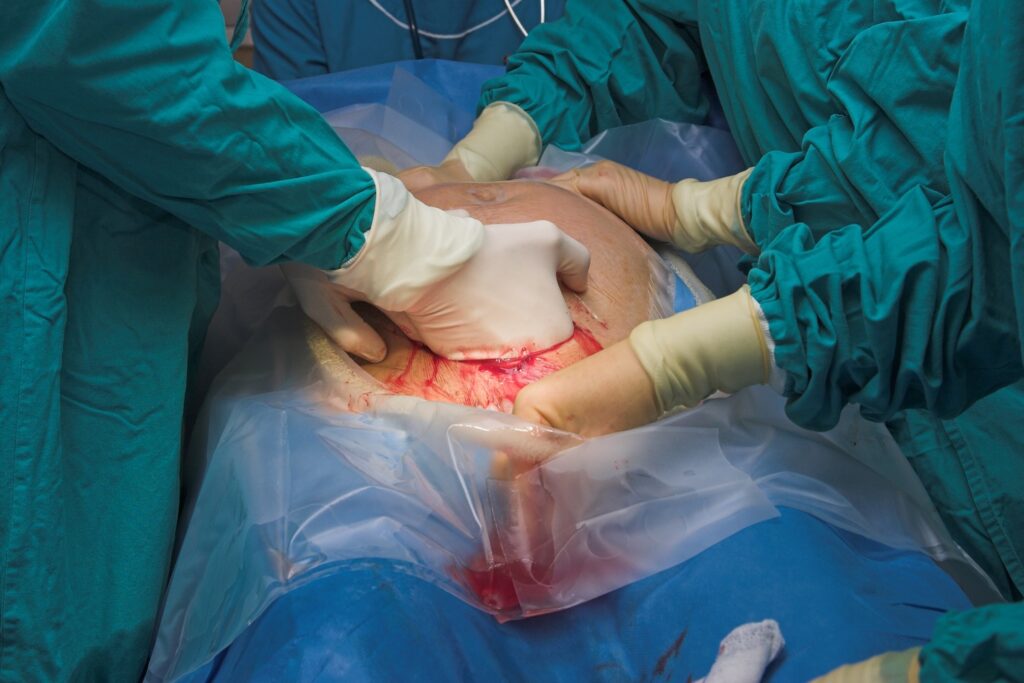
Cesarean delivery (C-Section) is a type of surgery in which the baby is born through an incision made on the abdominal wall and the mother’s uterus instead of passing through the natural birth canal.
This delivery method is performed for various reasons and is usually recommended when natural delivery is dangerous for the mother or the baby.
Reasons for cesarean delivery
Cesarean delivery may be performed for the following reasons:
1. Improper position of the fetus: If the fetus is not in the right position to exit the birth canal, such as the breech (sitting) or transverse position,
natural delivery is dangerous and cesarean section is preferred.
2. Multiple pregnancy: In twin or multiple pregnancies, natural delivery may be complicated and caesarean section is a safer option to preserve the health of the mother and babies.
3. History of cesarean section or uterine surgery: Mothers who have had cesarean sections in their previous deliveries may undergo cesarean section again
to reduce the risk of uterine rupture.
4. Placental problems: In cases where the placenta is in the wrong place (eclampsia) or does not function properly, natural childbirth can be dangerous.
5. Excessive size of the baby or pelvic narrowness: If the baby is too big or the mother’s pelvis does not have the proper structure for the baby to pass, cesarean section will be safer.
6. Special diseases or conditions of the mother: Chronic diseases such as severe diabetes, high blood pressure, heart disease, or certain infections may make natural childbirth dangerous.
7. Pregnancy complications such as pre-eclampsia or a decrease in the baby’s heart rate: In cases where serious complications occur late in pregnancy,
a cesarean section can be performed quickly to preserve the health of the mother and the baby.
How to perform cesarean delivery
A cesarean delivery is performed surgically and under anesthesia (usually local or spinal anesthesia), so that the mother can be awake and see her baby immediately after birth.
The steps to perform this surgery are as follows:
1. Preparation: The mother is transferred to the operating room and anesthetic drugs are injected. The incision site on the abdomen is cleaned and prepared.
2. Making an incision: The doctor makes a horizontal incision in the lower abdomen, close to the bikini line, and then an incision on the uterine wall.
These incisions allow the doctor to gently remove the baby from the womb.
3. Taking out the baby and placenta: After making the incision, the doctor takes out the baby through the uterus. Then the placenta is separated from the uterus and taken out.
4. Suturing: After the baby and placenta are removed, the doctor stitches the incisions in the uterus and abdomen. These stitches are usually absorbable and heal over time.
5. Transfer to the recovery room: After the operation, the mother is transferred to the recovery room and her condition is carefully monitored.
Post-cesarean care
Because cesarean delivery is a surgical operation, it requires special post-operative care:
1. Rest and reduction of heavy activities: recovery after cesarean section may be longer than natural delivery and requires more rest and avoidance of heavy activities.
2. Care of the suture site: The suture site should be kept clean and dry regularly. The doctor may prescribe painkillers and antibiotics to control the pain and infection.
3. Breastfeeding and taking care of the baby: The mother may have a little difficulty in starting breastfeeding due to pain in the abdomen.
Using special pillows or changing the position can help the mother.
4. Taking care of physical and mental health: Caesarean section may have physical and mental effects on the mother.
Adequate sleep, proper nutrition, and emotional support from spouse and family help recovery.

Advantages and disadvantages of cesarean delivery
Advantages: Caesarean section acts as a safe option in situations where natural childbirth is risky and can prevent serious problems for the mother and the baby.
Disadvantages: Cesarean delivery may present challenges in subsequent deliveries due to a longer recovery period, risk of infection, post-surgical pain, and complications such as adhesions.
Finally, the decision to perform a cesarean delivery should be based on the doctor’s advice and taking into account the health of the mother and the baby.
As mentioned, cesarean delivery, because it is surgery, usually has a longer recovery period and more challenges than natural delivery.
In the following, we discuss some issues and points related to cesarean delivery.
Complications and possible risks of cesarean delivery
Cesarean delivery is a surgical procedure and like any other surgery, it may be associated with certain complications. Some of the possible complications and risks of cesarean delivery include:
1. Risk of infection: Incisions made in the abdomen and uterus can be exposed to infection.
To reduce this risk, the mother is prescribed antibiotics and it is necessary to keep the place of stitches properly clean.
2. Bleeding: Cesarean delivery may cause more heavy bleeding than normal delivery. Excessive bleeding during or after surgery may require a blood transfusion.
3. Formation of blood clots: One of the complications of cesarean delivery is the increased risk of blood clots in the legs or lungs.
The doctor may advise the mother to get out of bed earlier and walk to reduce the risk of clot formation.
4. Damage to nearby organs: In rare cases, damage may occur to the organs around the uterus, such as the bladder or intestine, during the operation.
In these cases, additional surgery may be required.
5. Uterine adhesions in subsequent pregnancies: After cesarean, there is a possibility of adhesions in the uterus,
which may cause problems in subsequent pregnancies and even subsequent deliveries.
6. Respiratory problems in the baby: Some babies who are born through caesarean section may have breathing problems early in life,
especially if the delivery was made before the 39th week of pregnancy.
Important tips for recovery after cesarean delivery
For complete recovery and reduction of complications after cesarean delivery, mothers should pay attention to the following points:
1. Adequate rest and pain management: After cesarean delivery, the mother’s body needs rest. The doctor may prescribe pain medication to control pain after surgery.
It is better for the mother to avoid heavy activities and lifting heavy objects.
2. Proper nutrition: After caesarean section, proper nutrition is necessary to restore the body and increase energy.
Foods rich in protein, vitamins, iron and fiber help to heal and prevent constipation.
3. Mild physical activities: After a few days of the operation, the doctor may recommend that the mother gradually start light physical activities such as walking.
This helps to increase blood circulation and reduce the risk of blood clots.
4. Avoiding sex and using tampons: Usually, mothers are advised to avoid sex and using tampons for about 6 weeks after cesarean so that the body can fully recover
and reduce the risk of infection.
5. Care of stitches and signs of infection: The mother should regularly check her stitches and inform the doctor of any signs of infection,
such as redness, swelling, fever or purulent discharge.
6. Emotional and psychological support: Cesarean delivery may cause different emotions in the mother.
Some mothers may feel frustrated or depressed, especially if the cesarean delivery was performed against their will and due to medical necessity.
Family support and, if needed, counseling with a psychologist can help the mother.
Comparison of cesarean delivery and normal delivery
Natural birth and caesarean section each have their advantages and disadvantages.
Natural childbirth is preferred due to faster recovery, reducing the risk of infection and breathing problems in the baby,
but sometimes the situation requires that a cesarean section be chosen as a safer option to maintain the health of the mother and the baby.
In general, doctors try to recommend this method if a natural birth is possible, but if a natural birth is dangerous or there are certain problems, a cesarean section is performed.
Deciding on the type of delivery according to the conditions of mother and baby and consulting with a doctor is the best way to ensure the health of both.
Preparation for cesarean delivery
If the cesarean delivery is planned (that is, the decision has been made in advance to have a cesarean), the mother can prepare for this event.
Some important steps and tips for preparation include the following:
1. Consultation sessions with the doctor: The doctor explains to the mother about the reasons for performing a cesarean section,
the surgical procedures and its risks and benefits, and answers her questions.
Tests and examinations may also be done to check the condition of the baby and the mother.
2. Food and drug preparations: The mother usually has to fast the night before the operation (about 8 hours before the surgery, avoid eating and drinking)
so that there are no problems during anesthesia and surgery.
The doctor may prescribe certain drugs or prevent the use of certain drugs.
3. Mental and psychological preparation: Caesarean delivery as a surgical operation can be stressful for some mothers.
The presence of a close and supportive person such as a spouse or a family member can help reduce stress and prepare the mother.
4. Preparing to take care of the baby: After cesarean, the mother may need more help in taking care of the baby, especially in the first days.
Therefore, it is better to plan to get help from family or nurse.
5. Packing necessary hospital items: The mother can prepare personal items such as clothes, hygiene items, baby clothes and other things for the duration of her stay in the hospital.
Important points in choosing natural birth or cesarean section
Deciding between natural birth and caesarean section requires careful examination of medical conditions and the condition of mother and baby.
In most cases, doctors prefer natural childbirth because it involves fewer risks for the mother and baby and has a faster recovery.
However, in certain circumstances, a cesarean may be a better option.

The effect of cesarean delivery on future pregnancies
Cesarean delivery can have effects on future pregnancies, including:
1. The possibility of needing a cesarean section in subsequent births: If the mother has a cesarean section in one pregnancy,
the probability that subsequent deliveries will be performed by cesarean section increases.
However, some mothers who have had a caesarean section may be able to have a natural birth (VBAC) in subsequent pregnancies,
depending on the mother’s individual circumstances and the doctor’s advice.
2. Adhesion risks: After cesarean, the possibility of internal adhesions in the uterus and surrounding tissues increases, which can cause problems in subsequent pregnancies.
3. Risk of placental problems: Women who have had a cesarean section may experience placental problems in subsequent pregnancies, such as placenta previa
(a placenta on the cervix) or placenta accreta (a placenta attached to the uterine wall).
4. Time interval between pregnancies: To reduce the risks associated with consecutive cesarean sections, it is recommended to maintain a suitable interval between pregnancies
(about 18 to 24 months) so that the mother’s body recovers completely.
summary
Cesarean delivery is a method that can be very helpful in certain situations to maintain the health of the mother and the baby.
However, this method requires more care and preparations due to its surgical nature and possible complications, and has a longer recovery period.
Every expectant mother should check the delivery options with her doctor and make the best decision according to her and her baby’s personal conditions and health.
Finally, the main goal of childbirth – whether natural or cesarean – is to ensure the health of the mother and the baby,
and the doctors and the care team will suggest the best delivery method according to the condition of the mother and the baby.
Psychological points after cesarean delivery
Cesarean delivery can have psychological effects on the mother, and these points should be considered:
1. Mixed emotions: Mothers who have a cesarean section may have a variety of emotions, such as worry, postpartum depression, or even a sense of failure.
These feelings may be caused by not planning a natural birth, anesthesia or surgery.
2. Emotional connection with the baby: Some mothers may feel that they have less emotional connection with their baby due to the inability to give birth naturally.
But these feelings usually diminish over time, and the mother is able to establish a stronger emotional connection with the baby through skin-to-skin contact and breastfeeding.
3. Psychological care: Counseling and support from family and friends can help the mother to reduce psychological complications after cesarean delivery.
In cases where feelings of depression or postpartum anxiety (PDD) are severe, seeing a psychologist or counselor can be very helpful.
4. Family support: It is very important to have emotional support from your spouse or family members during recovery after cesarean section.
These supports help the mother to easily overcome the physical and mental problems caused by childbirth.
Advantages of cesarean delivery
In addition to the disadvantages and potential risks, cesarean delivery in some cases has certain advantages that can help the mother and the baby, especially in critical situations:
1. More control over the time of birth: In cases where the baby needs to be born immediately or at a certain time, cesarean delivery can be a good choice.
This issue is especially applicable in cases of high-risk pregnancies, placental problems, or specific conditions of the fetus.
2. Avoiding the pain of natural childbirth: For mothers who are afraid of severe pains of natural childbirth or problems related to it, cesarean delivery may seem like a suitable option.
3. Lower risk of harm to the baby: In situations where there is a risk of harm to the baby during natural delivery (such as breech or breech position),
caesarean section can be a safer way to give birth to a baby.
4. Faster process: In some emergency situations, a cesarean can be done faster and get the baby out of the womb in a shorter time, which can be vital to avoid risks to the mother or the baby.
Key tips to reduce the risks of cesarean delivery
To reduce the risks and improve the recovery process after cesarean section, the following points can be considered:
1. Careful medical care: After cesarean delivery, you should be under close medical supervision.
Regular follow-up of the physical condition of the mother and the baby by the doctor is necessary.
2. Moving and preventing blood clots: Gentle and early movement helps to improve blood circulation.
The doctor may recommend that the mother get out of bed and walk as soon as possible.
3. Proper nutrition and hydration: The mother should have a balanced diet for a faster recovery.
Consuming fluids also helps to speed up the healing process and prevent the body from complications such as constipation or anemia.
4. Support from nurses and doctors: After delivery, nurses and doctors should provide necessary care and guide the mother on suture care methods,
pain management, breastfeeding and postpartum activities.
5. Attention to mental health: Remember that the mental health of the mother is as important as the physical health.
Emotional and psychological support during this period, including talking to a doctor about feelings and anxieties, helps the mother to recover mentally and emotionally.
Finally
Cesarean delivery is still a common and safe choice for some mothers in certain situations, but due to the specifics of the surgery and the need for special post-operative care,
it should be done in urgent situations and with the doctor’s advice.
Natural delivery is generally the recommended method, but the choice of the type of delivery should be made based on the health of the mother
and baby and the specific medical conditions of each person.
In any case, the ultimate goal of any type of delivery is to maintain the health and safety of the mother and baby.
After childbirth, the recovery period and taking care of yourself, the baby, and mental and physical health are very important,
and complete recovery and establishing an emotional relationship with the baby is a priority in both types of childbirth.