

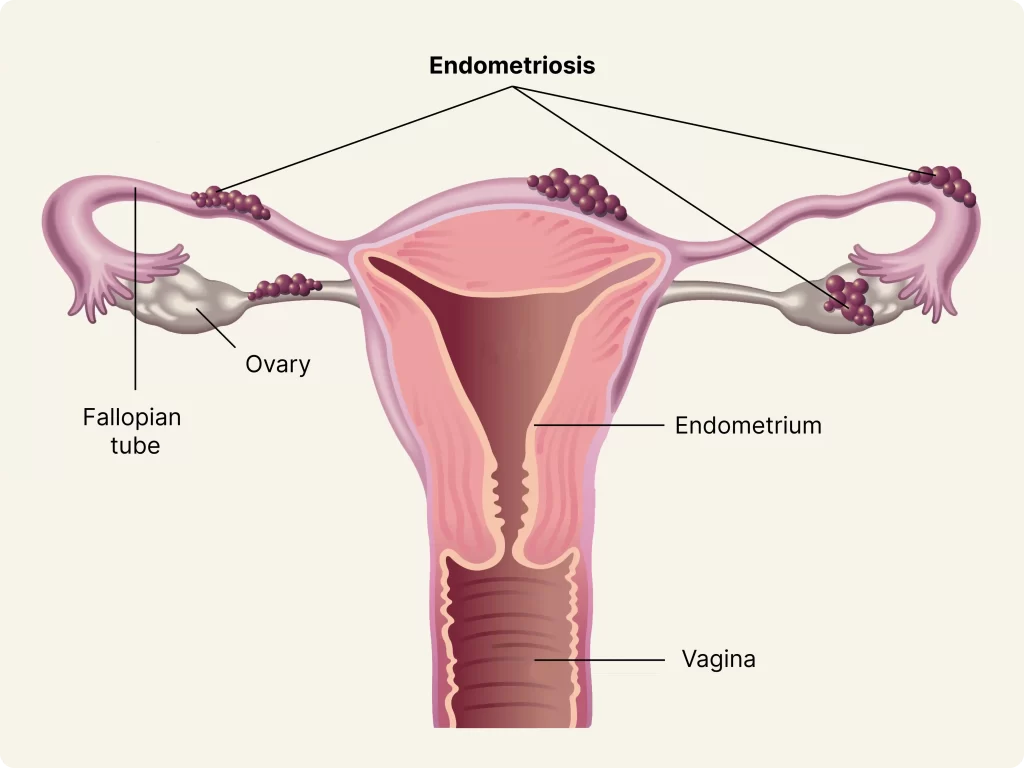
Endometriosis is a chronic and inflammatory disease in the female reproductive system, in which a tissue similar to the inner tissue of the uterus (endometrium) grows outside the uterus, such as ovaries, fallopian tubes, pelvic wall or even intestines and bladder.
This disease can be painful and is often accompanied by heavy or painful menstrual periods, pelvic pain, and fertility problems.
Symptoms of endometriosis
Symptoms of endometriosis may vary from person to person, but usually include:
1. Severe pain during menstruation: which is also called dysmenorrhea. This pain is usually felt in the lower abdomen and back and can be aggravated before or during menstruation.
2. Chronic pelvic pain: In many women with endometriosis, pelvic pain may continue chronically and long-term.
3. Pain during sex: This pain can be more intense especially during sexual intercourse.
4. Digestive problems: such as flatulence, constipation or diarrhea, which are especially felt during the menstrual period.
5. Fertility problems: Endometriosis may affect fertility and lead to delayed or difficult pregnancy.
Causes of endometriosis
The exact cause of endometriosis is still unknown, but some theories include:
• Recurrent menstruation: This means that part of the menstrual blood, instead of leaving the body, goes back and flows into the fallopian tubes and pelvic cavity.
• Genetics: Endometriosis is more common in some families and there is a possibility of genetic factors.
• Immune system disorders: which makes the body unable to correctly identify and destroy the endometrial tissue that grows outside the uterus.
Treatment of endometriosis
The treatment of endometriosis depends on the severity of the disease and the patient’s symptoms. Treatment options include the following:
1. Painkillers: such as ibuprofen or naproxen, which are used to reduce pain.
2. Hormonal drugs: which can prevent the growth of endometrial tissue and reduce the intensity of menstruation.
3. Surgery: In severe cases, surgery is performed to remove endometriosis tissues or even the ovaries and uterus (in certain cases).
Endometriosis is a chronic disease that requires long-term management.
By consulting a doctor and choosing the right treatment, symptoms can be controlled and the quality of life can be improved.
Lifestyle and management of endometriosis
Some lifestyle changes and complementary therapies can be effective in managing endometriosis symptoms:
1. Proper diet: Some research shows that consuming anti-inflammatory foods such as fruits, vegetables, whole grains, and omega-3 fatty acids (found in fish and flax seeds)
can help reduce inflammation and pain. It is better to limit the consumption of processed foods, added sugars and processed meats.
2. Regular exercise: Regular exercise, especially low-impact exercise such as yoga and walking, can help reduce pain and improve mood.
Regular exercise reduces stress levels and releases endorphins (happy hormones) that can relieve pain.
3. Stress reduction: Stress management through techniques such as meditation, deep breathing and yoga can be effective in reducing endometriosis pain.
Chronic stress can exacerbate pain and inflammation, so managing stress can help manage symptoms.
4. Psychological support and counseling: Living with endometriosis can be challenging and affect a person’s mental health.
Counseling or participating in support groups can help people better cope with their stress and worries and benefit from the emotional support and experiences of others.
5. Complementary treatment methods: Some people with endometriosis also benefit from complementary treatment methods such as acupuncture, massage and herbal treatments.
Of course, you should consult your doctor before using any complementary method.
Endometriosis and pregnancy
One of the most important concerns of women with endometriosis is fertility problems.
Although many women with endometriosis are able to get pregnant, some of them may need assisted reproductive methods such as IVF.
Endometriosis can cause adhesions around the fallopian tubes and ovaries that prevent the egg from entering the tubes.
Hormonal treatments and surgery to remove endometriosis tissue may help improve the chances of pregnancy.
If you want to get pregnant, it is better to plan treatment with a gynecologist so that the best treatment options can be considered.
Support role of family and friends
Endometriosis is a chronic disease that affects the quality of life and personal relationships. Emotional support from family, friends and life partner can help a person cope better with this disease.
Talking about the illness and special needs with those around you can lead to better understanding and support from them.
conclusion
Endometriosis is a complex disease that requires long-term management and care.
Although there is no definitive treatment for this disease, by combining treatment methods, lifestyle changes and psychological support,
its symptoms can be controlled and the quality of life can be improved.

Ways to diagnose endometriosis
Diagnosing endometriosis may be challenging due to the variety of symptoms and their similarity to other diseases.
The specialist doctor usually uses a combination of the following methods to diagnose this disease:
1. Pelvic examination: During a pelvic examination, the doctor looks for symptoms such as cysts or sensitive tissues in the pelvic area.
This examination may reveal signs of endometriosis in some cases, but is usually not enough on its own.
2. Ultrasound: Ultrasound through special imaging devices, especially vaginal ultrasound,
can show the presence of cysts caused by endometriosis in the ovaries (which are called endometriomas).
This method can provide some information, but it cannot accurately show the growth of endometriosis tissues in all areas of the pelvis.
3. MRI: In some cases, the doctor may prescribe an MRI to obtain more detailed information about the condition of the tissues and the pelvic region.
This method can help in diagnosing the location and extent of endometriosis.
4. Laparoscopy: Laparoscopy is a minimally invasive surgical procedure that is used as the “gold standard” to diagnose endometriosis.
In this method, the doctor directly observes the endometriosis tissues using a small camera that enters the abdomen through a small incision and takes samples if needed.
Also, some endometriosis tissues can be removed during laparoscopy.
5. Blood tests and blood markers: Some blood markers such as CA-125 may be high in some patients with endometriosis,
but this test alone is not diagnostic and may be elevated in other cases.
The importance of awareness and prevention of disease exacerbation
Awareness of the symptoms of endometriosis and quick consultation with a doctor can help in early diagnosis and prevent the progression of the disease.
If diagnosed early, endometriosis can be controlled with appropriate treatments and proper management.
On the other hand, many women have mild to moderate symptoms, and with non-surgical treatments or lifestyle changes, they can experience pain-free or low-pain life.
Early diagnosis and treatment can also reduce fertility problems and increase the chances of natural fertility.
New research and hope for new treatments
Research in the field of endometriosis is still progressing and scientists are trying to find new treatments and more effective drugs for this disease.
Among the research areas, more targeted drug treatments, immunotherapy and advanced surgical techniques can be mentioned.
Newer methods try to affect endometriosis tissues more precisely and cause fewer side effects.
Considering that endometriosis is a common disease, increasing public awareness and paying more attention to research
can help improve the quality of life of patients and find more effective treatments.
The role of social support and public education in endometriosis
In addition to affecting people’s physical and mental life, endometriosis is often not diagnosed correctly due to the lack of awareness of society and even some doctors.
This issue leads to a delay in the treatment and increases the pain and problems of the patient.
Increasing public awareness and understanding the symptoms of endometriosis can lead to early diagnosis and access to appropriate treatment.
The importance of training doctors and improving health systems
Due to the complexity of endometriosis symptoms and its similarity to other disorders, general practitioners and specialists should be familiar with the latest information about this disease.
Training courses and informing the treatment staff can help in timely diagnosis and referring the patient to the right specialist.
Also, creating standard diagnostic and treatment protocols in health systems can prevent patient confusion and increase treatment costs.
The role of media and awareness campaigns
The media can play an important role in increasing public awareness of endometriosis and reducing taboos related to women’s health issues.
Holding awareness campaigns, creating educational programs and interviewing affected people can help reduce the feeling of isolation and hopelessness in patients.
Also, knowing that millions of women around the world are facing this disease can strengthen feelings of empathy and social support.

A brighter future for endometriosis patients
Although endometriosis remains a challenging disease, medical advances and new research have raised hopes for finding more effective treatments
and even a complete cure for the disease in the future.
New pharmaceutical methods and more targeted treatments have made it possible to improve the quality of life of patients and reduce pain and problems related to fertility.
Also, research in the field of genetics and immunology may lead to a better understanding of the cause of endometriosis and finding new treatments.
Finally, supporting patients, creating an open space to talk about this disease, and improving health
and education systems are among the measures that can make the life path of endometriosis patients smoother and more hopeful.
Community awareness and support for patients is the first step to improve their conditions and create a world where women with endometriosis can live peacefully and with better quality.
Psychological and social challenges of endometriosis
Living with endometriosis is often accompanied by psychological and social challenges.
In addition to physical pain, many women with this disease face problems such as depression, anxiety, and feelings of isolation.
Chronic pain and limitations caused by this disease can negatively affect personal relationships, work relationships, and social activities.
These problems are especially common in those who have more severe symptoms and find it difficult to carry out their daily activities.
Psychological supports and support groups
Psychotherapy and counseling can help patients cope with the stress, anxiety, and worry caused by endometriosis.
Cognitive-behavioral therapy (CBT) and pain management techniques can be effective in increasing resilience and reducing feelings of helplessness.
Participating in support groups and communicating with people who have similar experiences can also be beneficial for patients,
because in this way people can feel solidarity and share their experiences and solutions with others.
The role of the doctor and the importance of effective communication with the patient
Effective and intimate communication between the patient and the doctor can significantly improve the treatment experience of the patients.
Doctors should listen to patients, take their symptoms and concerns seriously, and inform them about different treatment options.
Building trust and providing emotional support can help reduce patients’ anxiety and, on the other hand, increase the chances of follow-up and treatment success.
Efforts for legal changes and health policies
Endometriosis is still not recognized in many countries as a serious disease that requires special attention in health policies.
Supporting research and allocating funds to the study and treatment of this disease can help improve the quality of life of patients.
Establishing policies to support the rights of patients with endometriosis, including medical leave and special facilities in the workplace, can reduce their psychological and economic pressures.
Increasing awareness in schools and educational centers
One of the ways to reduce taboos and increase awareness of endometriosis is education in schools and educational centers.
Education about reproductive health and diseases related to the female reproductive system can be provided to students from an early age to increase public awareness.
These tutorials can help students to recognize the symptoms of the disease and seek medical help if necessary.
Family support and its role in improving the condition of patients
The support of family and relatives plays a very important role in improving the mental and physical conditions of patients.
Families can help patients manage the disease by understanding and accompanying them.
These supports may include helping the patient with daily activities, creating a positive and stress-free environment, and emotional support.
Understanding and accepting the challenges a person with endometriosis faces can help boost their spirits and reduce stress.
summary
Endometriosis is a complex and multidimensional disease that requires comprehensive management and attention to physical, psychological and social aspects.
By increasing public awareness, social support, improving health policies and family support, patients’ living conditions can be improved.
Creating a cultural and social environment where people with this disease can talk about their problems without feeling ashamed
or isolated is a fundamental step towards improving the lives of these patients.
Finally, the hope of scientific and medical advances, along with psychological and social support, can provide a way to a better and more peaceful life for endometriosis patients.