

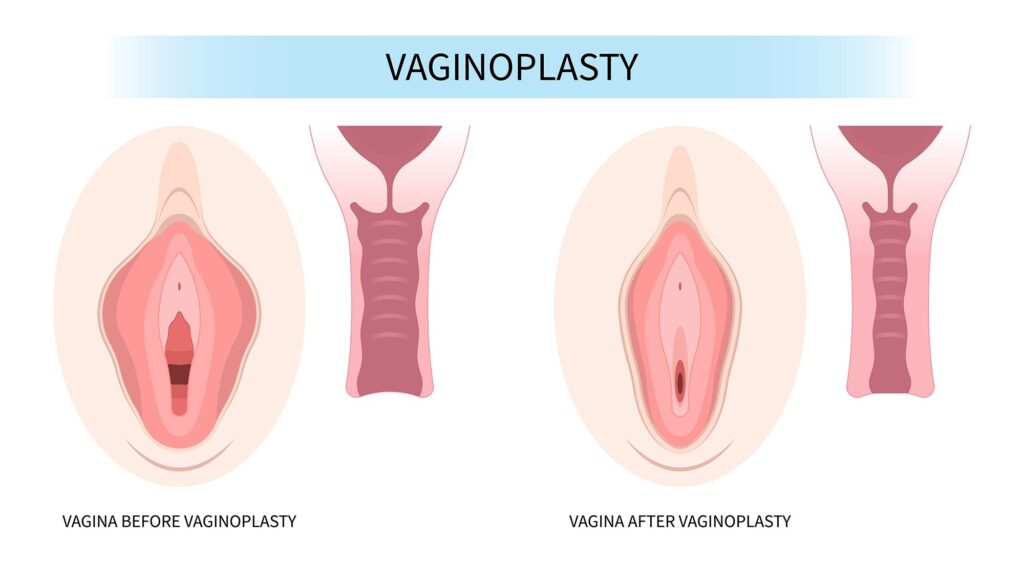
Vaginal rejuvenation is a series of procedures and treatments aimed at improving the appearance, function, and even feel of the vaginal area and its surroundings.
These methods are divided into two main categories:
1. Surgical methods: includes labiaplasty (shrinking or changing the shape of the labia), vaginoplasty (narrowing the vagina) and some other surgeries.
These procedures are often performed under local or general anesthesia and are suitable for people who want dramatic changes in their genital area.
The results of these procedures are permanent, but recovery after them requires time and care.
2. Non-surgical methods: These methods include the use of lasers, radiofrequency (RF), and injections of fillers or fat.
These methods are performed without the need for incisions and surgery,
and by stimulating collagen production and improving skin elasticity, they help improve the appearance and function of the vagina.
The results of these methods are usually temporary and may require periodic repetition.
The benefits of vaginal rejuvenation include increasing self-confidence, improving marital relations, and eliminating physical discomfort caused by vaginal laxity and sagging, dryness, or irritation.
Possible side effects may also include pain, swelling, bleeding, or the creation of scar tissue, which can be minimized by following post-treatment care and choosing a specialist doctor.
In non-surgical methods such as laser and radiofrequency, devices with light or radio waves are directed into or around the vagina,
which makes the skin firmer and younger by increasing collagen production.
These treatments are usually performed without the need for anesthesia or with local anesthesia, and daily activities can be resumed after the treatment session.
The filler or fat injection method is another non-surgical option that is used to increase the volume and improve the appearance of the genital area.
In this method, special fillers or body fat are used for better filling and shaping.
These methods are temporary and their results last from a few months to a year, which is why they need to be repeated periodically.
Care after vaginal rejuvenation includes tips such as avoiding heavy activities, avoiding vigorous sports and abstaining from sex for a few weeks, which helps to heal and stabilize the results.
It is very important to choose an experienced doctor and a reputable clinic, because performing these procedures by non-professionals can bring serious risks and side effects.
To choose the best method, it is recommended to visit a gynecologist and a plastic surgeon and consult about suitable options, age, general health status and expectations from the treatment.
Are these methods always effective? The effect of vaginal rejuvenation depends on the type of procedure, the individual’s condition and post-treatment care.
Some people get better results from surgical methods, while for others non-surgical methods are sufficient.
Each method of vaginal rejuvenation has its own advantages and disadvantages, and choosing the right method should be done based on needs, physical condition, and expert recommendations.

Some other points to consider when choosing a rejuvenation method include the following:
1. Psychological effects and increasing self-confidence:
Many women report a significant improvement in self-confidence and body satisfaction after performing these procedures.
These changes can have a positive effect on the quality of life and marital relations.
2. Cost and access to methods:
Surgical procedures are more expensive and require special equipment and expertise, while non-surgical procedures are usually less expensive.
Also, some of these procedures can be easily performed in clinics and do not require hospitalization.
3. Age restrictions:
Vaginal rejuvenation is usually recommended for adult women over the age of 18, but older women can also benefit from these procedures.
Of course, at older ages, less results may be observed compared to younger ages.
4. Effect on natural childbirth and pregnancy:
Many women think about vaginal rejuvenation after natural childbirth due to vaginal changes.
Methods such as vaginoplasty can be useful for these people and help to improve the conditions after childbirth.
But it is recommended that these procedures not be performed before pregnancy again or the next natural delivery because pregnancy can change the results of the treatment.
5. Duration of effect and the need to repeat the treatment:
As mentioned, the results of some non-surgical methods are temporary and need to be repeated.
This is important in choosing the method, because people who are looking for permanent results usually prefer surgical methods.
6. Consultation with an expert:
Consultation with a gynecologist and cosmetologist can help to choose the best method.
By examining the history of diseases, skin sensitivities, and the individual’s goals,
the doctor suggests the appropriate method and provides the necessary explanations about pre- and post-operative care.
7. Recovery time:
Depending on the type of rejuvenation procedure, the recovery time is different.
In non-surgical methods such as laser and radiofrequency, a person can usually return to daily activities quickly and the recovery period is very short.
But in surgical procedures such as vaginoplasty and labiaplasty, the recovery period may take several weeks.
During this period, heavy activities and sexual intercourse should be avoided so that the treatment area is completely restored.
8. Pre-treatment care:
Before performing vaginal rejuvenation procedures, full consultation with a specialist doctor is very important.
The doctor may perform the necessary tests and make recommendations for the person’s preparation.
Among these cases, it is possible to mention the cessation of certain medications and certain foods that may have a negative effect on the healing process.
It is also important to observe personal hygiene and prevent any infection before starting the treatment.
9. Possible complications and their management:
Although vaginal rejuvenation procedures are generally safe, like any procedure, they may have side effects.
In surgical procedures, complications such as bleeding, infection, and change of sensation in the treatment area may occur.
In non-surgical methods, there is a possibility of temporary irritation, swelling or redness.
To minimize these side effects, you should carefully follow the post-treatment care and consult a doctor if any abnormal symptoms occur.
10. Effect on improving menopause symptoms:
After menopause, some women experience symptoms such as vaginal dryness and a decrease in the elasticity of the skin of the genital area,
which may cause discomfort during sex and even burning and itching.
Rejuvenation methods such as laser and radiofrequency by stimulating collagen production can help reduce these symptoms and improve the quality of life of these people.
11. Choosing a valid clinic:
It is very important to choose a clinic with advanced equipment and professional personnel to perform vaginal rejuvenation.
The clinic must have the necessary licenses and use quality and standard devices. This choice can reduce the risks of treatment and improve the final result.
12. Questions and answers with the doctor:
Before making a decision, ask your doctor questions so that you are fully aware of the treatment process, expected results, and necessary care.
Some common questions can include the amount of pain and discomfort, the duration of the effect,
the number of sessions required, as well as the likelihood of the previous condition returning after treatment.
Finally, vaginal rejuvenation can be an effective choice to improve quality of life and increase self-confidence, but requires careful evaluation and professional advice to achieve the best results.
Vaginal rejuvenation methods are divided into two general categories: surgical methods and non-surgical methods. In the following, we discuss each category and its subcategories:

1. Surgical methods
These methods are suitable for structural and permanent changes in the vaginal area and its surroundings and usually require anesthesia or local anesthesia.
Among the most important surgical methods, the following can be mentioned:
• Vaginoplasty: This surgery is performed to narrow the vaginal canal and is suitable for people who have vaginal laxity due to multiple births or aging.
This method is often used to improve sexual sensation and increase individual satisfaction.
• Labiaplasty: This surgery is performed to change the size or shape of the labia (the edges of the vagina) and is usually used to reduce the size of the labia.
Some women experience discomfort due to lack of fit or irritation of the labia, and this surgery can help improve the appearance and reduce these problems.
Hodectomy (clitoral hood reduction): This surgery is performed by removing part of the skin covering the clitoris to increase sexual excitability.
This procedure is usually performed together with labiaplasty.
2. Non-surgical methods
These methods are less invasive and do not require incisions or anesthesia. Usually, these methods are repeated periodically and their results are temporary.
Among the non-surgical methods are:
• Vaginal laser: Using a laser to rejuvenate and tighten the vagina is one of the most popular non-surgical methods.
By stimulating collagen production, the laser improves the elasticity and firmness of the vaginal tissue.
This method is also effective for reducing dryness, improving the quality of vaginal tissue and reducing menopausal symptoms.
• Radiofrequency (RF): In this method, radio waves are used to increase collagen production in the vaginal tissue.
By heating the deep tissues of the vagina, these waves improve the elasticity and flexibility of the vagina.
This method is especially suitable for those who are looking for a faster result with less pain.
• Fat injection or filler: The injection of the person’s own fat or artificial fillers is used to increase the volume of the labia or areas around the vagina.
This method is useful for improving the appearance and increasing the volume of the genital area, especially for women who have sagging skin due to age or weight loss.
Platelet-rich plasma (PRP): In this method, platelet-rich plasma is extracted from the person’s own blood and injected into the vaginal area.
Platelets contain growth factors that stimulate collagen production and improve vaginal tissue. This method also improves sexual pleasure and reduces vaginal dryness.
HIFU: This method uses focused ultrasound waves to stimulate the deep layers of vaginal tissue and increase collagen production.
HIFU helps to tighten and improve the elasticity of the vagina and is a non-surgical option that does not require incisions.
3. Complementary and supportive methods
In addition to surgical and non-surgical methods, there are other complementary methods that can contribute to treatment results:
• Kegel exercises: these exercises are very effective for strengthening the pelvic floor muscles and can help to tighten the vagina and improve sexual sensation.
Continuous performance of these exercises can increase the effects of vaginal rejuvenation.
• Topical creams and gels: Creams and gels containing estrogen or special moisturizers can also help reduce vaginal dryness and improve its elasticity.
These products are usually used as treatment supplements and cannot replace the main rejuvenation methods.
Choosing the best method
To choose the best method, it is better to consult with a specialist doctor to suggest a suitable and effective method after examining your needs and physical conditions.
Important points before and after treatment
Before treatment:
• Preparation of the treatment area: To avoid any infection, the treatment area must be completely clean before starting the treatment.
• Not using anti-coagulant drugs: some drugs such as aspirin or ibuprofen may increase bleeding in surgical procedures.
The doctor usually asks the patient to stop taking these drugs before the surgery.
After treatment:
• Abstaining from sexual intercourse: Depending on the type of treatment, a person may need to refrain from sexual intercourse for several weeks until the treated area heals.
• Using a cold compress: To reduce swelling and bruising, you can use a cold compress.
• Use of prescribed drugs: In surgical procedures, the doctor may prescribe antibiotics or anti-inflammatory drugs.
These drugs should be taken regularly to prevent infection and inflammation.
summary
Each of the vaginal rejuvenation methods has its own advantages and characteristics, and choosing the right method should be done based on individual needs and conditions.
Consultation with a specialist doctor and choosing a reputable clinic are key factors in achieving satisfactory results.
In addition to improving the quality of life, these methods can also help to increase self-confidence and improve marital relations.
Vaginoplasty, which is performed to tighten the vagina and improve its beauty, is not suitable for all women and several factors must be considered:
Things to consider
General health:
Women should be in good general health. Certain medical conditions may make the procedure dangerous.
Realistic expectations:
It is important that women have realistic expectations of the result of the operation. A careful consultation with your doctor can help determine these expectations.
Reasons for the operation:
If the reason for the operation is due to medical or psychological problems, the doctor should check these things.
Age and hormonal conditions:
Age and hormonal status can affect the results of the procedure. Hormonal changes, especially during menopause, may affect decision-making.
Previous experiences:
If the person has already had multiple births or has generally had negative experiences with sex, they may need more counseling.
conclusion
In general, vaginoplasty can be beneficial for many women, but it should be done carefully and after consultation with a specialist doctor.
Only a doctor can evaluate the appropriateness of this method considering the individual’s condition.